Why companies need more than just plans?
I’m huge board game fan. I’ve been playing them for years, always trying to understand it and win at them. Every year i try to look for a new game. That’s how I found Gloomhaven which was ranked #1 on a Board Game Geek website(a place where with the best ranking). It’s a complicated game that takes a long time to setup and many hours to figure out. It’s complex, it has a legacy element, it’s a cooperative game.
If you picture yourself starting a game of Gloomhaven. You wouldn't just rush into combat without understanding the scenario, your team's capabilities, figuring out resources needed, making strategic decisions, defining how to play the game to maximize chances for winning and developing a coherent approach. Yet, surprisingly, many businesses do exactly this with their strategy.
To start one has to understand the game, understand the current scenario, talk and align with other team members, decide on what’t the over all strategy and how we will approach this. This way you are not destined to fail at a game. Turns out it’s also a great way to look at your business strategy!
As Mike Tyson used to say, everyone has plans until they get punched in their face.
Strategy vs. Strategic Planning: The Critical Difference
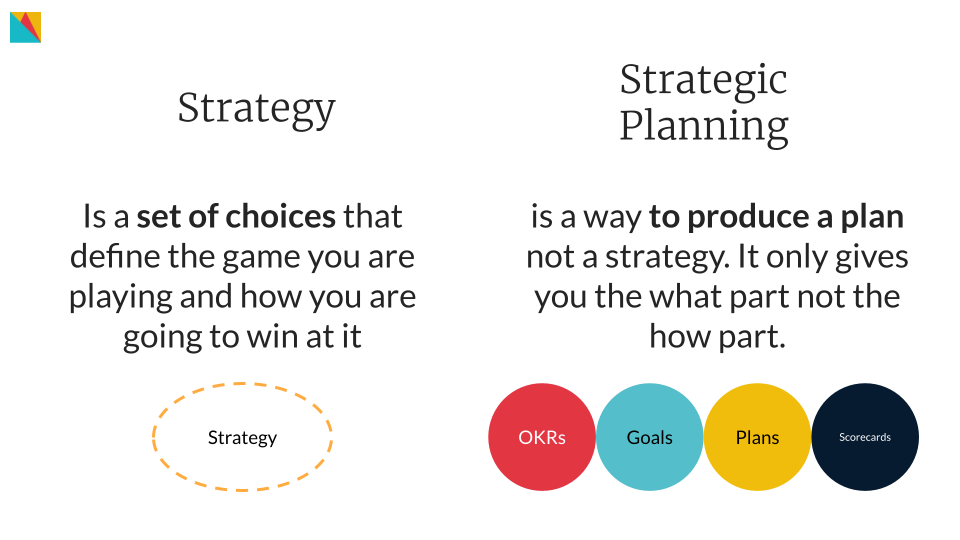
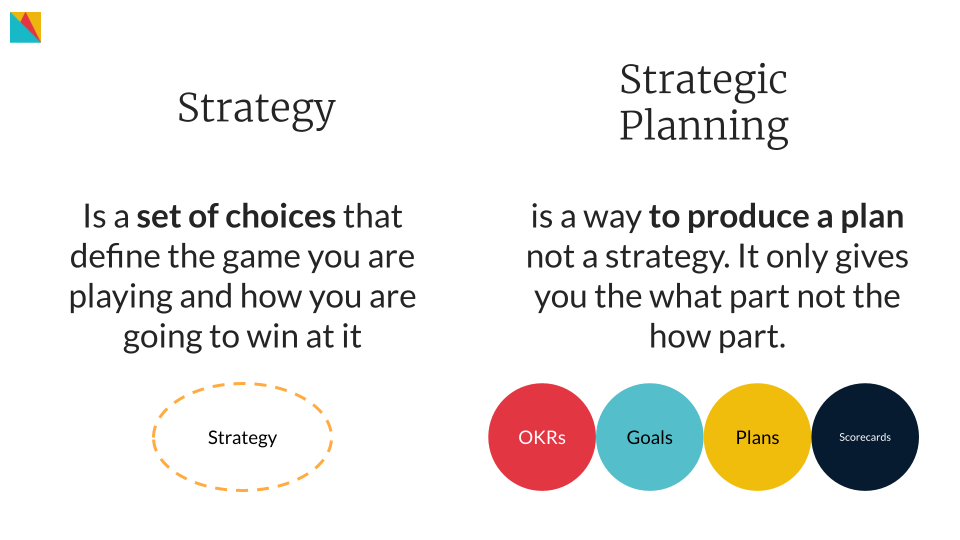
Strategy isn't just about planning - it's problem-solving. As Richard Rumelt puts it,
"You create a strategy; you don't pick one."
Strategic planning gives you the what, yet strategy provides the crucial how. Without it, you're constantly firefighting rather than moving forward purposefully.
Another great quote about planning comes from Dwight D. Eisenhower
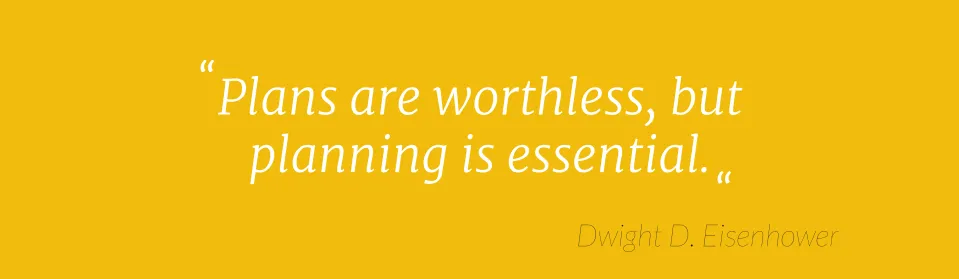
It catches the essence of Strategy that actually it’s more about the effort to collaboratively understand more about the organization rather thank just produce a set of plans.
The Reality Check: You Already Have a Strategy
Here's the truth: even if you haven't formally developed a strategy, you're following a strategy right now. It’s probably an accidental one, and you are lucking if you and your team have the same one. What I see in a lot of cases with accidental strategy is that it changes all the time, and everyone has a different one. An accidental strategy is like playing Gloomhaven or any other game by randomly selecting cards - you might get lucky, but you're more likely to fail.
What is strategy?
It’s one of the questions that get loads of answers, and there is not a clear one.
Yet I would say that Strategy is set of choices, that defines the game you are going to play and how you are going to to win. Choices can maximize your chances of winning and minimizing the chances for losing. Just as in Gloomhaven, where making a set of choices of which scenerio you are going to play, what characters you are going to use, which weapons, armour and potions your are going to take, what are the priorities of your team in the dungeon (kill all enemies vs loot all the gold. what is the right combination of ability cards - determines your success in winning the scenerio and progressing the story.
The choices actually help your organization to be more conscious about what you are doing, how you are doing it, why you are doing, what you are looking for. Those choices help you to differentiate from other organizations and help you build your competitive advantage.
From my experience the lest amount of effort that an organization can do is to figure out their Hedgehog.
Starting Point: The Hedgehog Concept
At minimum, every business should clarify their strategy using Jim Collins' Hedgehog Concept by answering three fundamental questions:
- What can you be the best in the world at?
- What drives your economic engine?
- What are you deeply passionate about?
This conversation with a team is already a lot. It helps you to align as an organization on what is it that you want to do. What is the place that you are going from. What you are not going to do. And how will you make money.
With the essence of three questions, you can start having a conversation about your BHAG(Big Hairy Audacious Goal) or about your North Star, a key metric that will allow you to see progress on that BHAG.
Already those parts give you a good foundation of your Strategy.
Building on the Foundations: The Six Strategic Questions
To evolve what you have you can continue with more strategic depth. Patrick Lencioni's six questions build a comprehensive framework for those conversations:
- Why do we exist?
- How do we behave?
- What do we do?
- How will we succeed?
- What is most important right now?
- Who must do what?
The essence of strategy comes from its simplicity. From what I see from the work with companies an answer to a simple question of “why do we exists” is a lot of times a really fuzzy, blurry and ambiguous sentences. Yet it shows the essence of a company.
The Kernel of Good Strategy
Like a well-planned Gloomhaven scenario, effective strategy consists of essential elements. One of the best frameworks for setting strategy has been developed by Richard Rumelt in his book “Good Strategy, Bad Strategy”.
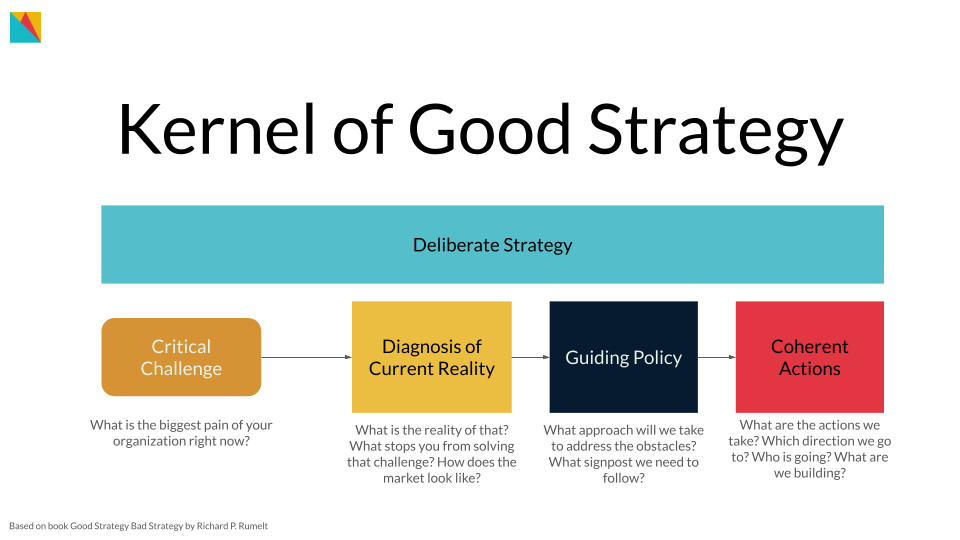
- Diagnosis of Current Reality: Understand your position, challenges, and competitive landscape
- Guiding Policy: Establish your approach to overcoming obstacles
- Coherent Actions: Implement specific moves that align with your policy
Just like it takes a village to raise a child, it takes a team to develop a strategy…
Developing a strategy as a one person is destined to fail. One of the lessons I got from John Scherer is that People tend to support what they have co-created. Involving your team in the process is a way of making sure they will support the end result.
A best way to do this is to start with your Leadership Team. Another approach that I see for larger companies (1000+ employees) is to create a Strategic Committee that will have a set of people from the different parts of the organization. It also helps to disseminate the information.
Having diverse perspectives helps the strategy to emerge. Having conflict and arguing about the directions and choices is a must!
There is nothing worse that a silent agreement to something said buy a CEO and later on doing a complete opposite. Involving team will help to build a share ownership. Will also help with Reality check, we have a tendency to wear our own glasses and see only through them.
Start having these conversations regularly. Use tools like:
- Strategic position matrices to assess your market stance
- Customer attractiveness vs. accessibility maps to focus efforts
- Growth direction frameworks to align on expansion priorities
to start the discussion with your team.
The last quote comes from Chris Argyris’s(Harvard/Yale Professor) wisdom:
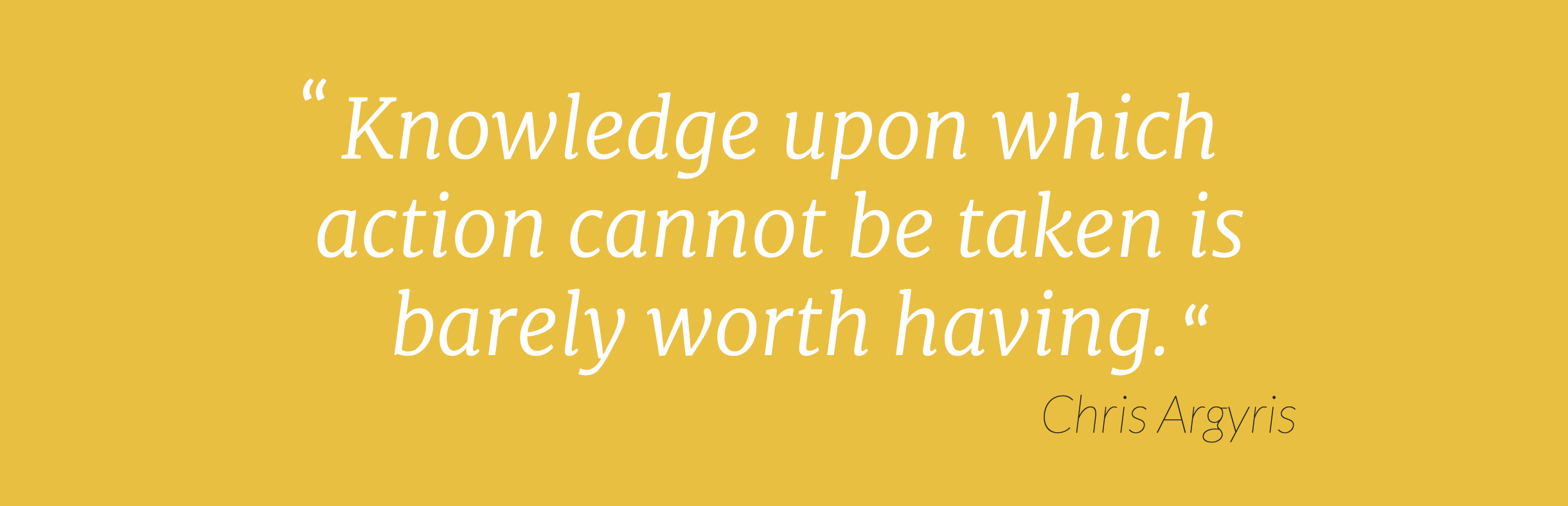
Your strategy should be a living document that guides real decisions and actions of your organization.
Making Strategy Work: Key Lessons
- Create a Strategy not just Plans - Define the game that you are playing
- Strategy isn't an event - it's an ongoing process
- Simplicity is crucial - overcomplicated strategies rarely succeed
- It must be a team effort - strategy isn't a solo game
The Path Forward
Is it challenging? Absolutely. As we often say, it's really freaking hard. But just like mastering Gloomhaven, the reward of a well-executed strategy makes it entirely worth the effort.
If you want to talk more about strategy hit me at chris[at]leaveamark.xyz