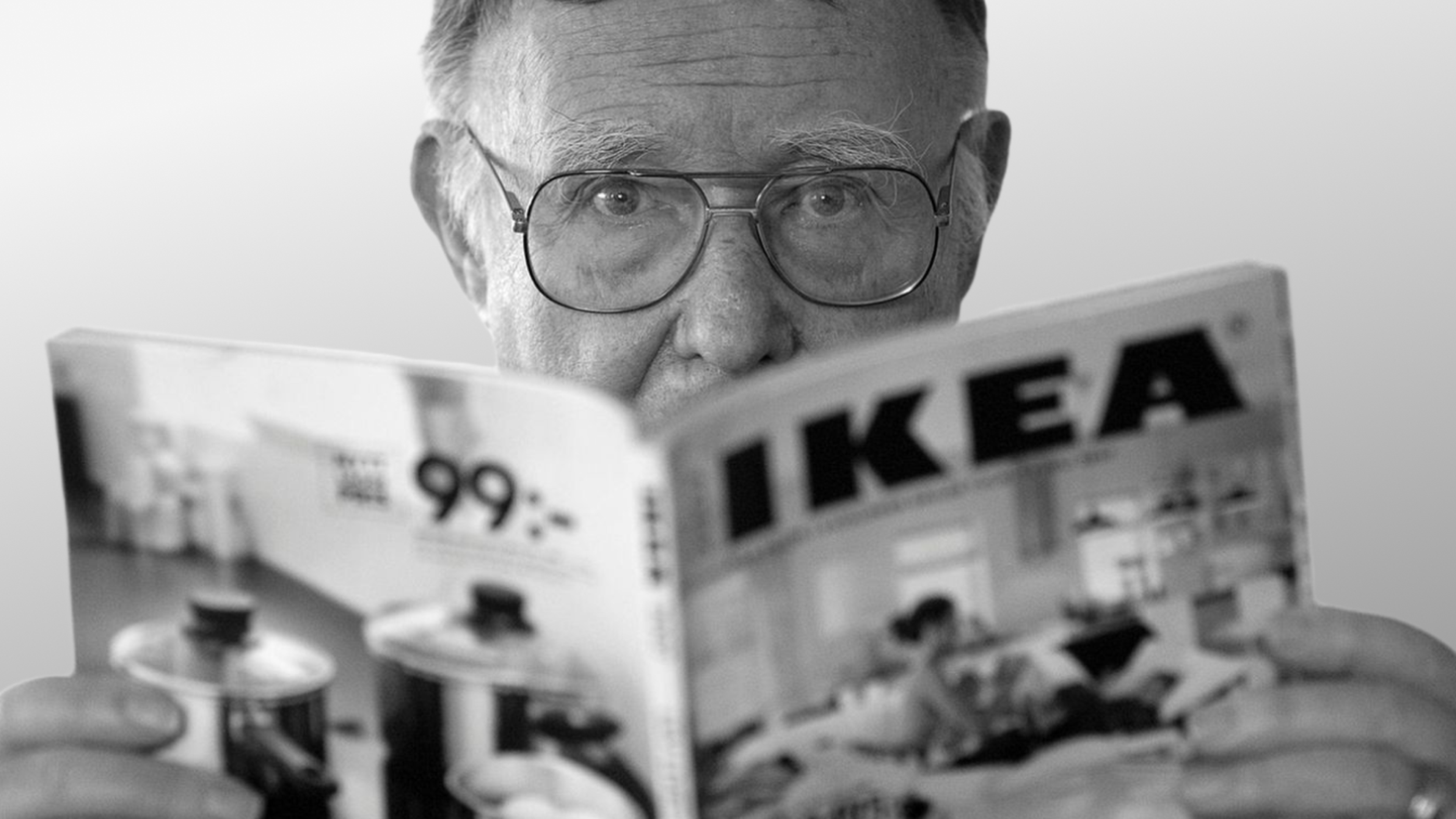
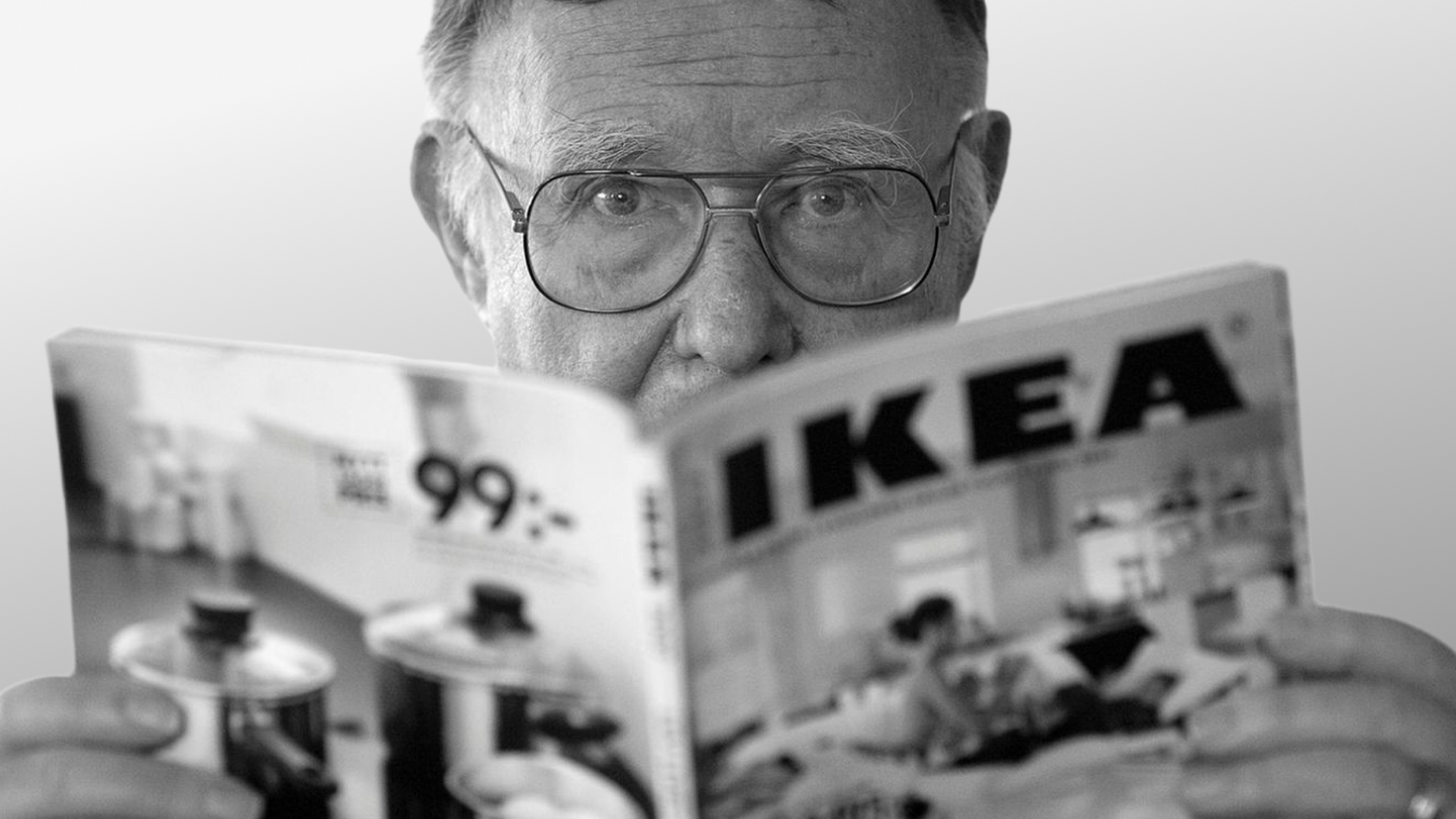
In 1976, Ingvar Kamprad wrote a nine-page document for the people running IKEA. He called it The Testament of a Furniture Dealer. It is shorter than most quarterly planning decks.
Fifty years later, it still runs the company. Now dressed and divided in to a longer doc, yet still valid!
Most strategy documents do not survive their first board cycle. This one outlived its author. The question is why.
The answer is simple: It is not a strategy document. It is a foundation document.
Everything else, the targets, the metrics, the structure, the plans, was allowed to follow. This one focused on describing the essence of what IKEA is.
Strategy fits in one sentence
The Testament opens with a single sentence that has defined fifty years of one of the largest businesses in the world:
Read it slowly. It tells you four things at once.
- What we do. Home furnishing products. Well-designed. Functional.
- Who we do it for. The many people.
- Why we do it. To create a better everyday life for them.
- How we will compete. Prices so low that as many people as possible can afford them.
This is positioning at its purest. Most companies cannot describe themselves in five paragraphs. Damn we struggle to nail it for what we do in Leave a Mark! Kamprad described IKEA in one sentence in 1976, and that sentence is still accurate in 2026. That is not luck. That is craft.
The essence of strategy is the discipline of compressing what you do, for whom, and why into something a person can repeat without notes. If your strategy cannot fit in one sentence, it is not a strategy yet. It is a draft for now.
1. Identity is a decision, not a description
Chapter one of the Testament is titled "The product range is our identity." That title is doing a lot of work.
Identity is not "what we sell." Identity is a decision about what we will sell, to whom, and why.
That single line determines the entire business model.
Kamprad knew, in 1976, that an identity decision would dictate the operating model for fifty years. And it did. That is what strategic clarity buys you. Decisions made once, that pay back for decades.
He also warned about confusing motion with direction:
Companies develop constantly. New products. New systems. New initiatives. But development without an anchoring identity is just motion. Progress is development that stays loyal to the foundation. And over a long enough horizon, the loyal version compounds. The busy version does not.
2. Trade-offs, named and signed
Most strategies pretend you can have everything. Kamprad refuses.
Then he names a tension and refuses to resolve it:
A wonderful problem. Not a tension to fix. A constraint to live inside.
When trade-offs are public, decisions get faster. When they are hidden, every meeting becomes a debate about something nobody is willing to name.
3. Constraints are how value is made
Chapter four is titled "Reaching good results with small means." It contains one of the most useful sentences in the entire document for anyone designing a product, a service, or an organisation:
"Any designer can design a desk that will cost 5,000 kronor. But only the most highly skilled can design a good, functional desk that will cost 100 kronor."
Read it twice.
Most teams treat constraints as obstacles. Kamprad treats them as the source of value.
"Expensive solutions to any kind of problem are usually the work of mediocrity."
When budget is unlimited, anyone can deliver. When budget is tight, only people who understand what really matters can deliver. The constraint is what reveals the skill.
Value at IKEA is not "high quality at any price." Value is the best possible outcome inside an explicit price ceiling. That is a different design problem, and it is the harder one.
Strategy works the same way. A strategy with no constraints becomes a wish list. A strategy with hard constraints is a tool for making decisions.
4. Exaggerated planning kills companies
Chapter five is on simplicity. The most quotable line is also the most uncomfortable one for anyone who runs annual planning offsites:
Notice he does not say lack of planning. He says exaggerated planning. The disease is not absence. The disease is excess.
Most leadership teams I work with spend an order of magnitude more time producing the plan than using it. The deck gets refined. The cadence to actually run the plan never gets installed.
Strategy is a foundation for action. If the planning ritual prevents the action, the ritual has to go. Not the action.
Act, decide, correct. Do not spend a thousand boardroom hours producing a document that nobody opens after Q1.
5. "Why" is the question that keeps strategy alive
Chapter six is about doing things differently. The engine of that chapter is one word:
And later:
This is the difference between strategy as a document and strategy as a discipline.
A document is finished. A discipline is ongoing. Asking "why" weekly, monthly, quarterly is what keeps the foundation honest. Without it, the strategy ossifies. With it, the strategy stays accurate even as the world changes around it.
"Why" is also how trade-offs get rechecked. Kamprad's buyers went to a window factory for table legs and a shirt factory for cushions. Why? Because the answer to "why are we using a furniture factory?" was "because everyone else does." That is not a good enough answer.
The same applies to your operating model. Why this org structure? Why this meeting? Why this metric? Why this customer segment? Strategy that cannot survive the question is not strategy. It is habit.
6. The privilege of mistakes
Chapter eight is the one most leadership teams need to read out loud, twice.
And:
This is the single best diagnosis of organisational dysfunction I have read.
When fear is the operating climate, you get committees instead of decisions. Reviews instead of action. Memos instead of conversations. Endless analysis dressed up as rigor.
Bureaucracy is not a structural problem. It is a fear problem with a structural defance system.
The way out is to name the fear, then to actively reward the people who decide and risk being wrong, not the people who delay and stay safe.
"It is always the mediocre people who are negative, who spend their time proving that they were not wrong. The strong person is always positive and looks forward."
Read that line to your next leadership team meeting and watch what happens.
7. Time is the only resource you cannot recover
The final chapter is titled "Most things still remain to be done. A glorious future!"
It is the chapter most CEOs need most.
"Bear in mind that time is your most important resource. You can do so much in 10 minutes. Ten minutes, once gone, are gone for good. You can never get them back."
Time is the one resource you cannot raise, hire, borrow, or rebuild. Every other resource has a recovery mechanism. Time does not.
"Divide your life into 10-minute units and sacrifice as few of them as possible in meaningless activity."
This is not a productivity tip. It is a strategic instruction.
Most leadership calendars are full of activities that cannot survive that test. Status meetings that update people who do not act on the update. Reviews that review things that nobody will change. Approvals that approve what was already decided.
If the foundation is clear, you protect time for the work that depends on the foundation. If the foundation is unclear, time leaks everywhere, and nobody can say why.
Kamprad also warns about success:
"The feeling of having finished something is an effective sleeping pill. A person who retires feeling that he has done his bit will quickly wither away. A company which feels that it has reached its goal will quickly stagnate and lose its vitality."
The foundation does not finish. It opens the next decade.
Kamprad in one of his last board meetings he atteneded, said to his board: “I’m so jealous of you—he knows he’s coming to the end of his life—that you get to keep working in IKEA and running this business, and I don’t.”(Acquired Podcast, IKEA episode)
What today's leadership teams skip
Most leadership teams I work with, want to skip the foundation and jump straight to the plan or execution. They want to have OKRs before they have a mission worth executing on. They have initiatives before they have a choice. They have a deck before they have a sentence.
The result is predictable. Misalignment dressed up as misexecution. Endless reorganisation. Strategy refreshes that change everything and nothing. Resource battles that never resolve, because the underlying choice was never made.
Kamprad did the opposite. He spent his energy on the foundation. The plan, the metrics, the structure, the rest of it, followed.
Foundations first. Then everything else.
Three questions worth sitting with
- Can you write your strategy in one sentence that names what you do, for whom, and why?
- What constraint are you willing to defend publicly, the way Kamprad defended low price with a meaning?
- Where in your week are you spending time that the foundation does not require?
If the answer to any of these is no, you do not need a new plan. You need a foundation.
Strategy is not what you write down. It is what you refuse to compromise.
Kamprad wrote his foundation in 1976. It is still working.